After Flex Posts Went In at Coolidge Corner, Blocked-Lane Reports Fell by Two-Thirds
- Jonathan Lansey
- November 1, 2026
- 2 mins
- Infrastructure
- bike bureau bike infrastructure cities parking policy road safety
Coolidge Corner on Harvard St is Brookline’s top hotspot for cars blocking the bike lane. During the 2026 restripe, the town added flex posts at the corners there in the week of August 17. One regular rider with a consistent route reported there before and after.
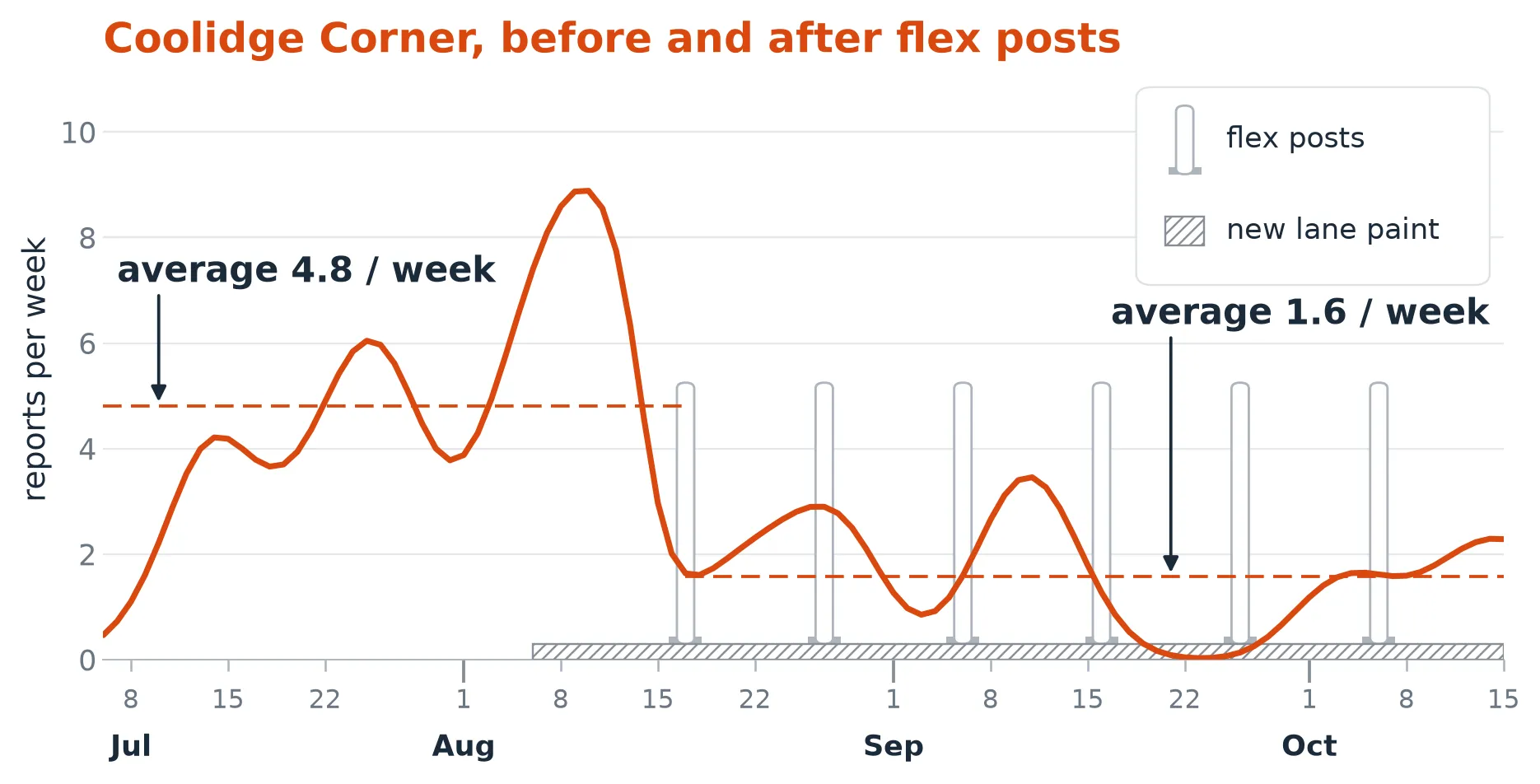
Harvard St at Coolidge Corner: one rider’s reports per week, Jul 6 – Oct 15, 2026 (smoothed). Dashed lines: before/after averages.
Their reports at the corner fell from 4.8 to 1.6 a week, a rate ratio of 0.33 (95% CI 0.15–0.68, p = 0.002). Over the same period, the same rider’s reports in Boston (1.08×) and elsewhere in Brookline (0.79×) held roughly steady, so this isn’t the rider simply reporting less.
Rates count only days the rider was out reporting, and leave out the changeover week of Aug 17–23.
Caveats
- One rider. No other rider reported at the corner both before and after.
- Other changes. Things like deliveries or enforcement could also have shifted over the same weeks.
- Posts only at corners. The blocking that remains is mostly mid-block, where there are no posts.
Takeaway: a few posts appear to help where they stand. Carrying physical separation along the whole block, and onto Beacon St, is the next step.
References
- Loud Bicycle. “Bike Bureau: Report Bike Lane Obstructions.”
- Town of Brookline. “Harvard Street Paving.”